For a law firm, documents are not paperwork around the work - they are the work. Matter files, contracts, wills, deeds, correspondence and attendance notes are the practice, and they are also exactly what the SRA, the ICO and the courts will hold you to. Manage them well and compliance largely looks after itself. Manage them loosely and you are one misplaced file, missed retention date or unexplained access away from a problem. Here is what your obligations actually require of your documents, and how to meet them without it becoming a full-time job.
What the SRA expects of your documents
Two duties do most of the work here. The first is confidentiality: the SRA Code of Conduct requires you to keep the affairs of current and former clients confidential. In document terms that means secure storage, encryption, and access limited to the people who genuinely need each file. The second is that you must be able to account for your files - to show, if asked, that they have been kept, protected and handled properly throughout their life. Both duties sit alongside UK GDPR and the DPA 2018, so getting your documents right serves several regulators at once.
Retention: no single answer, and that is the trap
There is no one retention period handed down by the SRA. It depends on the matter, and the range is wide.
| Matter type | Typical retention (indicative) |
|---|---|
| General client matter | Minimum six years from conclusion; many firms keep longer. |
| Litigation | Six years or more from the end of the matter. |
| Conveyancing & property | Six to fifteen years; some deeds kept far longer or returned to the client. |
| Wills, probate & trusts | Often kept indefinitely, or handed to the client for safekeeping. |
| Family, especially involving children | Six years or more, frequently extended. |
| Commercial & contracts | Six to twelve years, in line with the underlying agreements. |
These are a general guide, not legal advice - always confirm against your own retention policy, your professional indemnity insurer and current SRA guidance. The practical point is this: managing all of that by hand is where firms come unstuck. Destroy a file too early and you have no defence to a later claim; keep everything forever and you are breaching data-protection minimisation and paying to store risk. Our guide on how long to keep business records covers the wider statutory periods that sit around your SRA obligations.
Confidentiality and security by design
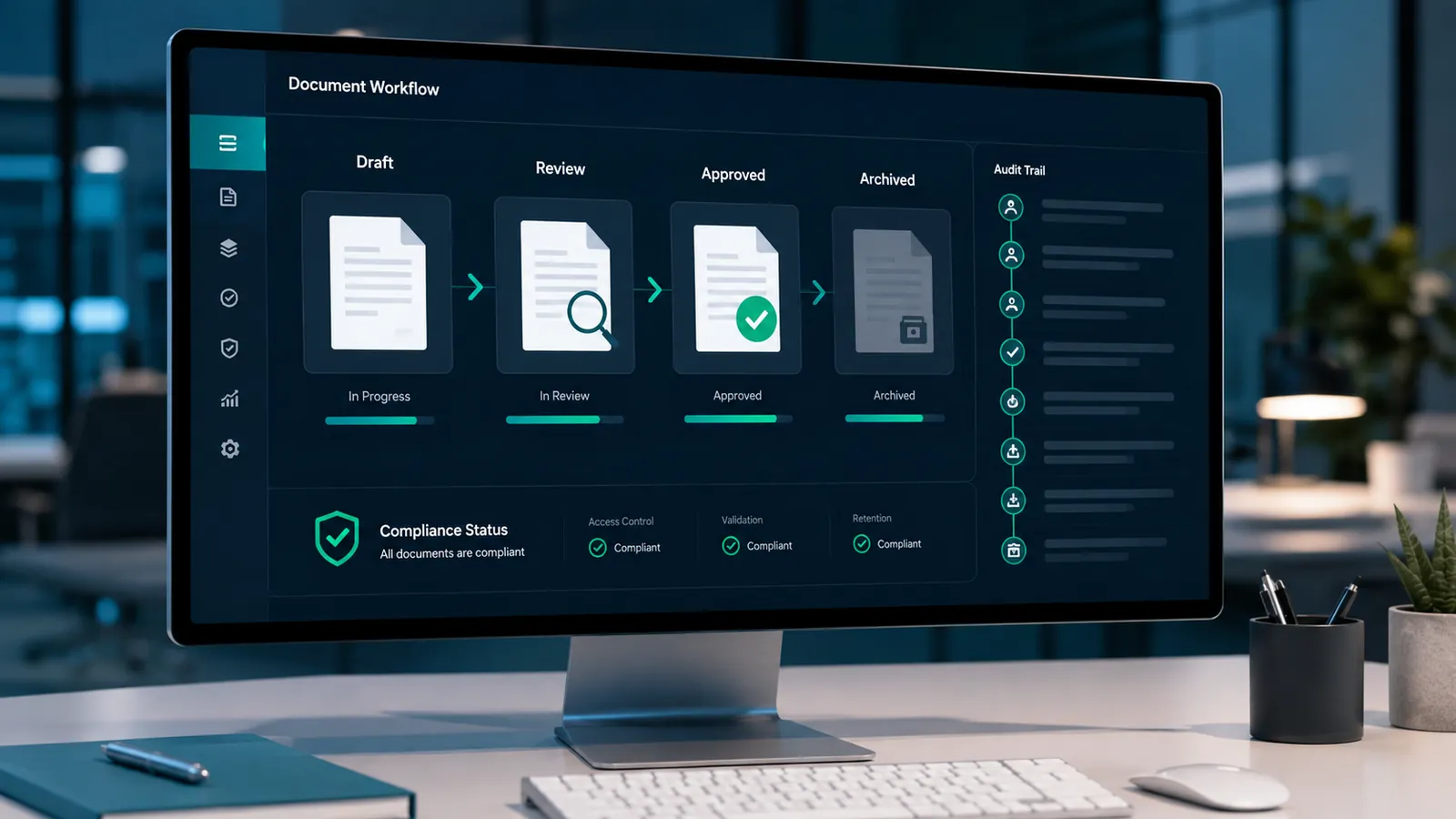
Client confidentiality is not a policy you write once - it has to be built into how documents are stored and reached every day. That means encryption at rest and in transit, access granted by role so a file is only visible to those working on it, multi-factor authentication on the systems that hold client data, and a record of every access and change. Those same controls are what underpin an information-security standard like ISO 27001, and they are increasingly what clients and insurers expect to see before they trust you with sensitive matters.
Legal hold: when the clock has to stop
When litigation or an investigation is anticipated, normal retention and destruction have to stop for anything potentially relevant. That is a legal hold, and it has to be reliable: you need to freeze specific files so they cannot be altered or deleted even if their retention period lapses, and prove with a tamper-evident audit trail that they were preserved intact, with an unbroken chain of custody. Doing that across a filing cabinet and a shared drive is fragile. Doing it in a system built for it is a couple of clicks and a complete record.
Secure destruction at the end of the line
Retention has a back end as well as a front end. Once a file has genuinely passed its period and is not on hold, keeping it is a liability, not caution. Destruction should be secure and evidenced - shredding to the BS EN 15713 standard, a certificate of destruction for each batch, and a chain of custody that stays unbroken from your store to the shredder. The goal is to be able to show not just that a file was destroyed, but that it was destroyed correctly, on purpose, at the right time.
Where DocFlow fits
DocFlow is built for exactly this kind of controlled, accountable document handling. Every matter file lives in one secure, encrypted store with access granted by role, so confidentiality is enforced rather than hoped for. Retention periods are applied automatically by matter type, so nothing is destroyed too early or kept too long, and files due for review or destruction surface on time. Every access and change is captured in a tamper-evident audit trail, legal holds can be applied and proven, and Aida classifies and indexes incoming documents automatically so a new matter is organised from the first email. When a client, the SRA or a court asks for a file, you produce it - and its full history - in seconds.
If you are still moving matter files off paper, our guide to document digitisation is a good starting point, and data privacy in document management covers the UK GDPR side in more depth. You can also see how it all comes together for a firm on our document management for legal page.
Compliance, for a law firm, is really a documents discipline wearing a regulatory hat. Get the storage, retention, access and audit trail right, and the SRA obligations, the ICO expectations and the courts' demands are largely met as a by-product - while your fee earners spend their time on the matter, not on the filing.